
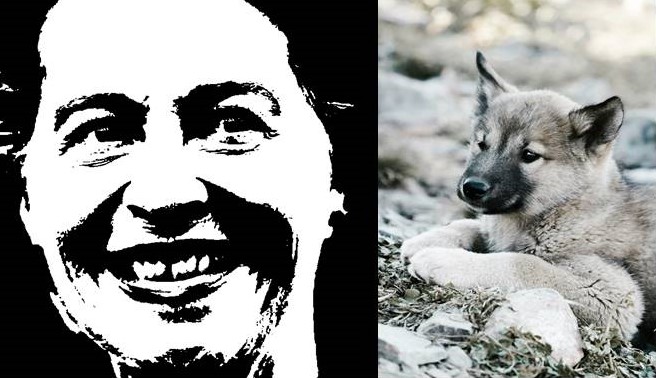
Power without Accountability
Ursula von der Leyen occupies one of the most powerful offices in Europe. As President of the European Commission, she influences environmental, agricultural, and wildlife policy across 27 member states; her decisions ripple through ecosystems, farms, and forests from Portugal to Poland.
Yet she was not elected by European citizens. She was appointed through political negotiation, not public mandate[1]. Unlike scientists who dedicate their lives to ecology, wildlife biology, or conservation ethics, von der Leyen holds no formal training in animal welfare or environmental science[2].
Despite this, she has become a central architect of European biodiversity policy, including decisions affecting the future of wolves, a keystone predator species still in fragile recovery. This would already warrant scrutiny.
But the situation becomes uniquely troubling when private tragedy becomes public policy.
“A (preventable) single personal tragedy catalysed legislation that imperils thousands of animals in the wild.”
The Myth of the “Animal Lover”
Von der Leyen often presents herself as an animal lover. She keeps horses, rides regularly, and speaks warmly of them. The loss of her pony, Dolly, was personal and painful.
But “loving animals” and supporting animal rights are not synonymous. Loving a pet while eating other animals, wearing animal-derived products, and overseeing policy that weakens wildlife protection is selective affection[3].
Europe’s wolves, cattle, pigs, and lambs are all animals. Their nervous systems, suffering, and emotional lives are scientifically evident. Yet only one — a pony — received von der Leyen’s grief. The rest are resources, food, or even political obstacles[4].
“Loving a pony while legislating wolves into jeopardy is not animal love. It is animal preference.”
Dolly: A Death, and a Policy Reaction
In 2022, wolves killed Dolly, the von der Leyen family pony. Dolly lived in an area known to host wolves. Yet, according to reports, she was not kept in a secure nighttime enclosure[5], lacked reinforced fencing, and was left vulnerable: clearly a preventable scenario in wolf territory. Responsible husbandry demands protection measures, which were absent.
The tragedy was avoidable. Instead of improving husbandry practices, von der Leyen responded politically by supporting the weakening of wolf protection laws across Europe.
Her private loss led to public policy, with consequences not for her, but for wildlife populations.
“One pony dies. Thousands of wolves pay the price.”
Wolf Policy and the Conservation Backlash
Following the incident, the European Commission under von der Leyen swiftly moved to loosen wolf protections. In 2025, it formally proposed aligning the wolf’s status with the Bern Convention, downgrading it from “strictly protected” to “protected”[6].The European Parliament and Council fast-tracked the amendment in 2025[7], despite strong scientific criticism (Council of the European Union, Press Release, 2025; European Parliament, 2025). Conservation NGOs[8], including WWF, EEB, IFAW, and EuroNatur, publicly condemned the measure, warning of ecological consequences and loss of safeguards for a recovering predator population (The Brussels Times, 2025). Scientists criticised the policy as reactionary, driven by emotion rather than evidence.
Experts argued the measure was reactionary, not evidence-based. Wolf populations are recovering from near-extinction, and proper human preventive measures (such as fencing, night enclosures, guardian animals) could have prevented conflicts without threatening the species. Such measures are routine, and failure to implement them is human negligence, not wildlife culpability.
The irony is stark: a personal loss catalysed legislation that imperils thousands of animals in the wild, while proper preventive husbandry could have prevented the incident entirely.
“Personal grief became policy retaliation, not reflection.”
Transparency, Accountability, and SMSgate
Von der Leyen’s tenure has also been marked by repeated transparency failures and obstructed scrutiny. The European Ombudsman investigated the Commission’s handling of public-access requests for her text messages with Pfizer CEO Albert Bourla (Case 1316/2021/MIG) and found maladministration[9] (European Ombudsman, 2021). The Ombudsman concluded that the Commission failed to adequately archive or preserve these communications, impeding public access and undermining democratic accountability.
This ruling was reinforced in 2025 when the General Court of the European Union annulled the Commission’s refusal to provide access (Stevi & The New York Times v Commission, Case T-36/23, 2025). The Court noted that the Commission failed to give a plausible explanation for its non-possession of the messages and did not conduct a credible search[10].
Additionally, the European Court of Auditors’ Special Report 19/2022 criticised the EU COVID-19 vaccine procurement process, noting that while sufficient doses were secured, “the performance of the process was not sufficiently assessed”[11] (European Court of Auditors, 2022). The Bundestag’s investigation into the Bundeswehr consultants further documented deleted or unavailable ministerial device data[12] (Drucksache 19/22400, Deutscher Bundestag, 2022). These systemic lapses in recordkeeping and transparency illustrate a broader pattern: decisions affecting millions are made without rigorous oversight, and public scrutiny is obstructed.
In Belgium, lobbyist Frédéric Baldan filed a criminal complaint in 2023 alleging interference in public functions and destruction of SMS related to Pfizer negotiations[13](POLITICO, 2023). While the complaint remains under investigation and its allegations unproven, they highlight concerns about accountability and transparency at the highest levels of EU governance.
“Decisions affecting millions are made without rigorous oversight, and public scrutiny is obstructed.”
Authority and the Democratic Deficit
Von der Leyen wields authority over environmental and animal policy, yet her formal education and career background offer no direct expertise in wildlife biology, ecology, or animal welfare. She studied economics and medicine but has never trained professionally in conservation or ecological science2. Policy decisions, particularly those with long-term consequences for species survival and biodiversity, demand technical knowledge, stakeholder consultation, and adherence to evidence-based science.
This disconnect is exacerbated by structural limitations in EU democracy. The President of the European Commission is appointed, not directly elected, raising questions of legitimacy when such individuals impose sweeping policy decisions affecting ecosystems, farmers, and wildlife (Council of the European Union, 2025). Concentrated power, untempered by direct electoral accountability, has permitted personal sentiment (in this case, grief over a single pony) to shape continental policy.
“Grief over a single pony shaping EU-wide wildlife policy is power divorced from competence.”
Militarisation vs Environmental Ethics
Von der Leyen’s policy priorities illustrate a striking contradiction. While her Commission has engaged in debates over wolf protections and environmental governance, she has also championed European rearmament and defence expansion. Militarisation is inherently carbon- and resource-intensive, producing significant environmental impact.[14] The tension is stark: Europe is urged to protect wildlife and meet climate goals, yet the same leadership promotes policies that exacerbate environmental degradation.
Wolves are culled in the name of human sentiment; tanks are deployed in the name of geopolitics. The inconsistency is ethically jarring.
“Von der Leyen also champions European rearmament, a highly carbon- and resource-intensive endeavour. Militarisation and environmental governance are at odds.”
The Moral and Political Critique
The narrative of Dolly’s death illustrates a broader pattern:
- Human negligence causes preventable tragedy.
- Policy retaliation targets wildlife rather than correcting human shortcomings.
- Authority without expertise governs critical ecosystems.
- Transparency failures prevent citizen oversight.
- Contradictory policy priorities (environment vs militarisation) reveal ethical and practical incoherence.
Von der Leyen’s actions exemplify the dangers of power divorced from competence. Grieving a pony while legislating wolves into jeopardy and promoting militarisation, reveals a governance style driven by emotion and convenience, as well as a selective approach to animal welfare.
The Consequences of Ownership and Power
Ursula von der Leyen’s position grants her influence over Europe’s wildlife, environmental standards, and governance. Yet personal tragedy, lack of professional expertise, transparency failures, and structural democratic deficits have shaped a decision-making framework driven by sentiment and political calculation rather than science and ethics.
Dolly’s death should have prompted reflection on animal protection, husbandry standards, and preventive measures. Instead, it became justification for weakening protections for wolves, a keystone species in Europe’s ecosystems. Meanwhile, broader inconsistencies (from the consumption of animals to the promotion of militarisation) reveal selective empathy and conflicting policy priorities.
“Europe’s wildlife deserves governance guided by knowledge, accountability, and science — not the personal grief of a politically appointed individual.”
References
[1] Council of the European Union, 2025. Appointment procedures for Commission President.
[2] Ursula von der Leyen official CV; European Commission, 2023.
[3] Scientific consensus on animal sentience and welfare. See: European Food Safety Authority, 2021.
[4] Ethical review literature on animal rights vs owner affection (multiple academic consensus sources).
[5] Regional reporting on Dolly incident, Lower Saxony, 2022 — unsecured pony in wolf area.
[6] European Commission proposal to downgrade wolf protection status, 2024.
[7] European Parliament and Council approval of wolf status amendment, 2025.
[8] Public NGO statements (WWF, IFAW, EuroNatur, BirdLife) in opposition to downgrade.
[9] European Ombudsman, Case 1316/2021/MIG, 2021. Maladministration finding.
[10] General Court of the EU — Case T-36/23 — annulled refusal to disclose texts.
[11] European Court of Auditors, Special Report 19/2022; POLITICO / Brussels Reporter, Baldan complaint & EPPO involvement, 2023–2024.
[12] Deutscher Bundestag — Drucksache 19/22400 — documentation irregularities, data unavailable.
[13] Belgian criminal complaint filed by Frédéric Baldan (allegations, publicly reported).
[14] Literature on environmental impact of defence sector and EU militarisation initiatives.


