
When compassion is punished and neglect institutionalised
Editor’s note (24 December 2025):
Since publishing this article, Zoe Rosenberg has been released from jail under California’s “half‑time” rule. She will serve the remainder of her sentence under strict house arrest beginning in January. I am leaving the original article intact for context, but readers should be aware of this update.
The imprisonment of animal rights activist Zoe Rosenberg, coupled with the denial of her essential medical care, exposes a glaring contradiction in the United States’ justice system. A country that proclaims liberty and human rights has permitted a situation that would be intolerable under European constitutional standards. From an Italian perspective, this case exemplifies a judicial model that is backward and punitive, as well as incompatible with modern democratic values.
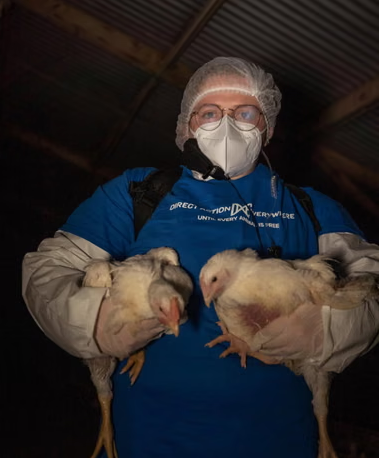
Zoe Rosenberg, a 23-year-old activist, was sentenced to 90 days in jail for rescuing four chickens from a slaughterhouse in California. Her punishment is not only disproportionate to the act of compassion that triggered it, but it has also placed her life at risk. Zoe, who suffers from Type 1 diabetes and gastroparesis, has reported that jail authorities are restricting her access to fast-acting glucose and may confiscate her insulin pump.
Thus, she is punished for saving lives, while her own life is endangered by systemic neglect. This paradox reveals the unevolved and retrograde nature of U.S. judicial practice.
Constitutional Contrast
- Italian Constitution:
- Article 32 guarantees health as a fundamental right of the individual and interest of the community.
- Article 27 prohibits inhuman treatment and affirms rehabilitation as the purpose of punishment.
- U.S. Constitution:
- The Eighth Amendment prohibits “cruel and unusual punishment.”
- Yet enforcement is weak; inmates often suffer neglect until litigation or public outrage forces change.
What is constitutionally prohibited in Italy is, in the United States, too often tolerated. The denial of life-sustaining medical care to Zoe would provoke scandal and immediate intervention in Europe, but in America it is treated as routine.
Human Rights Dimension
The restriction of Zoe’s medication is not a mere inconvenience: it is life-threatening. Without immediate access to glucose, she faces the risk of seizures, coma, or death. Her confinement in a mental health unit, with only one hour outside her cell per day, compounds the cruelty.
Rosenberg herself describes her situation:
“The booking process was not complete until around midnight, and another inmate woke me at 4:30 a.m. banging on their door and screaming. I’m exhausted.
I live with Type 1 diabetes and gastroparesis. The jail is restricting my access to fast-acting glucose to treat low blood sugar episodes. If I don’t treat a low immediately with 15 carbs of fast-acting glucose, I could have a seizure, go into a coma, or even die. Due to the limited supply they’re giving me, I’m often undertreating lows or forced to ration glucose.
The head nurse said I could keep my insulin pump for my first night, but it seems they may still ultimately take it away. Without my pump, my care would fully be out of my hands. It would all be up to the jail staff. The jail’s medical competency is questionable. Last night, I had to teach one of the jail nurses what causes diabetic ketoacidosis, which is a life-threatening complication of Type 1 diabetes.
Once you’re in jail, you have very few rights, but still a hell of a lot more than animals. At least, I still theoretically have the right to live. My cell is small, but I can stand up and take a few steps. In many parts of the US, animals can legally be housed in such tight confinement that they can’t even spread their limbs or turn around. When I first began animal rescue work, we’d save chickens from now-illegal battery cages on factory farms in California. I’ll never forget the looks of awe on these hens’ faces when we would bring them back to the sanctuary, and they’d experience freedom for the first time. Everyone deserves to experience basic freedom. Ironically, that is why I am here. For my work to give animals freedom, I have lost my own.
But I have a release date. There will be an end. That’s not true for most animals. They are constantly in my thoughts. Once I get access to an envelope and stamps, I’ll be sending a letter to California Attorney General Rob Bonta, asking him to step in to help the hundreds of thousands of birds suffering in filth and confinement on Perdue’s Petaluma Poultry factories. I hope you’ll join me.”
From a European perspective, such treatment would trigger immediate public outrage, parliamentary debate, and likely judicial intervention. In Italy, it would be deemed unconstitutional and unacceptable.
Animal Rights Dimension and Penal Archaism
Zoe’s imprisonment stems from her attempt to liberate chickens from factory farm confinement. Her own observation captures the profound irony: “For my work to give animals freedom, I have lost my own.”
The symbolic overlap is striking: both animals and the activists who defend them are caged, denied basic needs, and stripped of autonomy. While animal rights remain a contested field in Italy, human rights violations are unequivocally condemned. Zoe’s case bridges the two, demonstrating how cruelty towards animals and cruelty towards humans are intertwined in the same system.
The judicial paradox is stark: property and profit are prioritised over life—human and non-human alike. Compassion is criminalised, while institutional neglect is normalised.
The U.S. justice system is revealed as atavistic, clinging to punitive models that Europe abandoned decades ago. Zoe Rosenberg’s case is both a personal tragedy and a mirror held up to the United States, reflecting a system that is unevolved and indifferent to human dignity.
This is not justice: it is atavism masquerading as law.
In light of constitutional principles and fundamental rights, the treatment of Zoe Rosenberg is indefensible. It constitutes a violation of human dignity and a profound failure of justice. In the tribunal of public conscience, the U.S. system stands guilty of retrogression.