

Part of the series: Exploring the Literary Giants, examining influential authors through paired comparisons of context, style, and enduring impact.
🔍 Society, power, and the dangerous dream of remaking humanity.
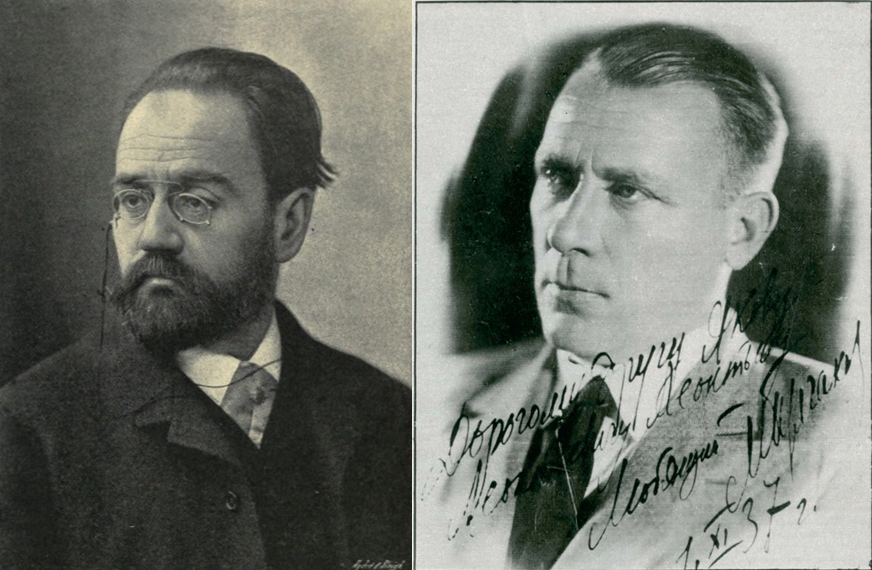
Why these two?
Émile Zola and Mikhail Bulgakov belong to different centuries, languages, and literary movements, yet their work is united by an uncompromising investigation into the forces that shape human beings. Both authors confront society, political authority, class, ideology, and the institutions that claim to know what humanity should become.
Zola was born in Paris in 1840 and became one of the central figures of French Naturalism. His novels descend into the material reality of nineteenth-century France, examining human behaviour within the crushing pressures of poverty, environment, heredity, and industrial capitalism. His work systematically exposes how economic and social structures constrain human potential, leaving his characters to struggle against an uncaring environment.
Bulgakov, writing more than half a century later in revolutionary Soviet Russia, faces a radically different reality. Born in Kiev in 1891, and a doctor by training, he eventually became one of the most inventive and subversive writers of twentieth-century Russian literature. His work emerged from a society transformed by revolution, civil war and Soviet power, where censorship profoundly restricted what could be written and published. Rather than documenting material conditions directly, he turns to fantasy, satire, allegory, the supernatural, and the grotesque. He makes Moscow a stage for the Devil, transforms a stray dog into a municipal bureaucrat, and allows an operating theatre to become a laboratory for political hubris.
Zola’s miners, workers and prostitutes are trapped within economic and social structures that shape their lives. Bulgakov’s writers, scientists, bureaucrats, artists and ordinary citizens find themselves caught in a world where ideology has become so pervasive that reality itself begins to behave like a nightmare.
Bringing Zola and Bulgakov together reveals two profoundly different methods of social critique: one uses realism to expose reality, while the other uses unreality to reveal the absurdities hidden within it.
Time, place, movement
Émile Zola (1840–1902) lived during an era of rapid industrial expansion, political upheaval, and intense social transformation in France. Central to the development of Naturalism—a movement that pushed Realism towards a scientific observation of human behaviour—Zola sought to apply ideas of causality, environment, and heredity to literature.
Zola was not merely a detached observer. For Germinal, he conducted meticulous research in mining communities, descending into the pits to understand the physical reality of the working class. His vast twenty-novel cycle, Les Rougon-Macquart, attempted to trace the medical and social history of a single family under the Second Empire, confronting industrialisation, alcoholism, prostitution, and class struggle.
Mikhail Afanasyevich Bulgakov (Михаил Афанасьевич Булгаков; 1891–1940) belonged to a far more turbulent moment in twentieth-century history. Born in Kiev, he trained as a physician before devoting himself to literature amidst the Russian Revolution, the Civil War, and the consolidation of Soviet power. His medical background gave him a clinical understanding of the human body, while his experiences under state censorship gave him an equally intimate knowledge of the political control of language and art.
Bulgakov wrote in an atmosphere where literary production was strictly policed. His greatest works, including The Master and Margarita and Heart of a Dog, could not be published in their complete forms during his lifetime. Where Zola wrote within a society struggling with the consequences of industrial capitalism, Bulgakov wrote under a regime attempting to engineer an entirely new social order. Yet both transformed their historical anxieties into enduring literature by looking closely at what happens to human beings when grand systems collide with ordinary life.
Core themes
The central theme connecting Zola and Bulgakov is dehumanisation—what happens when human beings are treated as raw material to be shaped by forces larger than themselves.
In Zola’s Germinal, the miners labour in darkness and danger under conditions that reduce existence to physical survival. The mine itself becomes a monster, consuming bodies to sustain industrial wealth. Yet Zola never strips his characters of their humanity; he gives them fear, sexuality, anger, and political consciousness, making their systematic reduction all the more devastating.
Bulgakov examines the same issue from the opposite direction in Heart of a Dog. Here, a surgeon attempts to transform a stray street dog into a human being through surgery. The resulting creation, Polygraph Polygraphovich Sharikov, acquires human speech and bureaucratic authority while retaining the brutal instincts of a stray. Where Zola shows a ruthless economic system turning men into animals, Bulgakov shows an ideological system artificially turning an animal into a man. Power and social engineering form another crucial parallel. Both writers understand that power is not merely exercised through laws, but it enters homes, bodies, language, and imaginations.
In Germinal, collective action gives the miners a voice, but the strike also reveals how desperation can lead to destruction. In Heart of a Dog, Sharikov rapidly adopts the language of entitlement and officialdom, eventually securing a job eliminating stray animals. Both writers demonstrate that when power changes hands, the former victim does not automatically remain morally pure, and attempts to manufacture a “new human being” frequently corrupt the very humanity they claim to elevate
Style comparison
Zola’s prose is expansive, observational: almost intensely physical. He builds his literary world through exhaustive sensory detail: the stench of tenements, the heat of engine rooms, the darkness of subterranean tunnels, and the collective rhythm of crowds.
His Naturalism depends upon causality and contrast. A landscape or an apartment building is never merely a backdrop; it is an active force shaping the temperament and choices of his characters. Zola’s narrative voice operates with the clinical authority of an investigator, systematically uncovering the hidden mechanisms of nineteenth-century French society.
Bulgakov’s style is fluid, satirical, and unpredictable. His prose can shift from quiet realism to surreal nightmare within a single paragraph. The supernatural sits comfortably beside mundane Soviet bureaucracy; the ridiculous becomes terrifying, and the terrifying suddenly turns comic.
While Zola uses a scalpel to dissect society, Bulgakov uses satire to distort reality until its inherent contradictions become impossible to ignore. In The Master and Margarita, the Devil’s retinue exposes the greed and hypocrisy of respectable Soviet citizens simply by taking their bureaucratic systems at face value.
Where Zola makes us feel the suffocating weight of the material world, Bulgakov makes us question whether the official version of reality is sane at all.
Key works
Germinal (1885) remains Zola’s indisputable masterpiece of industrial conflict and the centrepiece of the Rougon-Macquart cycle. Set amidst a brutal miners’ strike in northern France, the novel transforms the coal pit into a terrifying beast that devours human lives, weaving together painstaking documentation of working-class hardship with the awakening of collective political consciousness.
L’Assommoir (The Drinking Den; 1877) catapulted Zola to literary fame through its uncompromising study of working-class Paris. Tracking a laundry worker’s slow ruin through poverty, social pressure, and urban alcoholism, Zola uses relentless Naturalistic detail to expose how hostile environmental conditions inevitably crush individual ambition.
Nana (1880) offers a searing critique of the hypocrisy and moral decay of French Second Empire society. As a celebrated courtesan rises from the gutters of Paris, she becomes an engine of ruin for the aristocratic men who seek to possess her, serving as both a vibrant individual and a symbol of a corrupt ruling class consuming itself.
Thérèse Raquin (1867), an early, claustrophobic masterpiece of guilt and psychological torment, examines a violent murder committed by two secret lovers and its harrowing aftermath. Zola observes with clinical precision how unbridled passion, anxiety, and remorse physically deform the human mind.
La Débâcle (The Downfall; 1892) presents a panoramic portrayal of the Franco-Prussian War and the collapse of the Second Empire. Moving between individual soldiers on the battlefield and the sweeping political catastrophe around them, Zola captures the futility of military incompetence and the sheer physical agony of warfare.
J’accuse…! (I Accuse…!; 1898), though an open letter rather than fiction, remains one of modern history’s most consequential acts of public writing. Fronting the newspaper L’Aurore, Zola directly accused the French military establishment of anti-Semitism and judicial cover-ups during the Dreyfus Affair, establishing the artist as an indispensable moral counterweight to state authority.
The Master and Margarita (Мастер и Маргарита / Master i Margarita; written 1928–1940, published 1966–1967) stands as Bulgakov’s crowning achievement. Written in secret under constant threat of purge, the novel weaves together three brilliant strands: a satirical visit by the Devil to modern Moscow, a deeply psychological retelling of Pontius Pilate’s trial of Yeshua Ha-Notsri, and a poignant love story involving a persecuted author and his devoted mistress.
Heart of a Dog (Собачье сердце / Sobachye serdtse; 1925) is a darkly hilarious, unsettling satire on Soviet attempts to manufacture a “New Man”. When a bourgeois surgeon implants human organs into a stray street dog, he produces Sharikov—a crass bureaucrat who rapidly weaponises party slogans against his creator, creating one of literature’s sharpest warnings against ideological and scientific hubris.
The Fatal Eggs (Роковые яйца / Rokovye yaytsa; 1924) presents a fast-paced sci-fi satire in which a well-meaning zoologist discovers a ray that accelerates growth in living organisms. When an overzealous bureaucrat commandeers the technology to replenish the nation’s poultry supply, a shipping error results in armies of giant reptiles terrorising the countryside.
The White Guard (Белая гвардия / Belaya gvardiya; 1925) offers a deeply personal, empathetic chronicle of the Russian Civil War through the eyes of the Turbin family in 1918 Kiev. Drawing upon Bulgakov’s own experiences as a physician, the narrative balances intimate domestic warmth against terrifying historical chaos, detailing the collapse of an old world with profound dignity.
A Young Doctor’s Notebook (Записки юного врача / Zapiski yunogo vracha; 1925–1926) gathers candid, semi-autobiographical short stories detailing the trials of a newly graduated physician posted to a remote rural hospital. Blending vivid realism, medical emergencies, and wry dark humour, the stories capture the extreme vulnerability of a lone human being trying to hold back death with fragile knowledge.
Legacy and influence
Zola’s influence extends far beyond Naturalism.
His determination to place social conditions, labour, poverty and political injustice inside serious literature helped establish the novel as a powerful instrument of social observation. His fiction influenced generations of writers interested in the relationship between individuals and the environments that shape them.
His public intervention in the Dreyfus Affair also demonstrated that a writer could step outside literature and enter the moral and political conflicts of his time.
Bulgakov’s legacy represents a triumph over state suppression. His work demonstrated how censorship and political absurdity could be transformed into brilliant literary material. The Master and Margarita has become one of the great twentieth-century novels precisely because it refuses to remain inside a single category: it is satire, fantasy, philosophical fiction, love story, historical meditation and political allegory simultaneously.
By showing that literary resistance can take many forms and need not resemble a political manifesto, both authors affirm that literature’s highest calling is to challenge the official version of reality.
Final reflections
Reading Zola and Bulgakov side by side highlights a fascinating evolution in how literature confronts power. Zola belonged to an age that believed in observation, science, and the power of documentation to reveal truth. His work demands that we look directly at the physical realities we would rather ignore: the mine shaft, the slum, the factory floor.
Bulgakov belonged to an era where state power had commandeered language itself, creating a political reality so absurd that realistic documentation was no longer enough to capture it. To expose a system that claimed to be constructing paradise, he had to resort to the supernatural and the ridiculous.
Yet when we place Germinal alongside Heart of a Dog, their core concerns converge. Zola shows us human beings crushed into animality by an uncaring economic machine. Bulgakov shows us an animal elevated to human status by an ideological machine, only to become a monster of bureaucracy.
Both writers leave us with the same unsettling realisation: that whenever society treats human beings as raw material to be engineered (whether by market forces or political decrees), it deforms the very humanity it promises to progress.
And somewhere between the dark depths of Le Voreux and the chaotic streets of Bulgakov’s Moscow, these two masters meet. They remind us that while systems may change, the duty of the writer remains constant: to stand with the individual against the machine, and to insist that human dignity cannot be engineered.
Part of the series: Exploring the Literary Giants
→ View all entries in this series
You may also like:
- George Bernard Shaw and Luigi Pirandello → Read essay