

Part of the series: Exploring the Literary Giants, examining influential authors through paired comparisons of context, style, and enduring impact.
🔍 Myth-making and morality in modern fantasy.
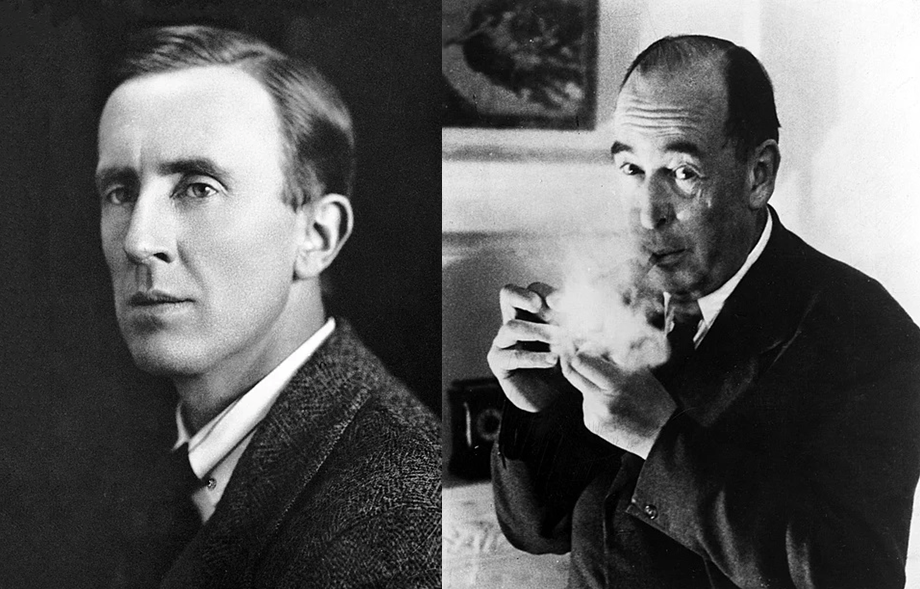
Why these two?
J. R. R. Tolkien (1892–1973) and C. S. Lewis (1898–1963) are united by a profound conviction that myth and fantasy are not mere escapes from reality, but essential instruments for exploring fundamental moral truths. Writing in the wake of the devastating world wars of the twentieth century, both authors rejected the disenchantment of modern secularism, turning instead to imaginative world-building to examine the nature of good and evil, sacrifice, temptation, and redemption. Their works are populated by characters whose choices carry cosmic weight, set against landscapes where ordinary individuals are called to extraordinary moral endurance.
Although both belonged to the same Oxford literary circle—the Inklings—and shared deep scholarly roots in medieval and Northern literature, they developed distinct approaches to myth-making. Lewis used myth as an accessible, explicitly allegorical and theological framework to illuminate Christian truths, crafting vivid stories designed to awaken spiritual longings. Tolkien approached myth-making through a vast, immersive secondary world—a “sub-creation”—allowing moral and spiritual truths to emerge organically from history, language, and geography rather than direct symbolic allegory.
Bringing them together reveals two different approaches to the same fundamental concern: how can myth and imagination revive moral awareness and spiritual depth in a modern world that has lost its sense of the sacred?
Time, place, movement
John Ronald Reuel Tolkien (1892–1973) wrote against the backdrop of profound historical and technological upheaval in twentieth-century Britain. Having served as a signal officer on the Western Front during the Battle of the Somme (where he lost most of his close friends), Tolkien experienced first-hand the destructive power of industrialised warfare and modern machinery. As a professor of Anglo-Saxon and English Language and Literature at Oxford, he sought solace and meaning in philology, early Germanic legend, and Old Norse mythology.
Tolkien’s scholarly deep-dive into language convinced him that myth is a vehicle for truth rather than falsehood. His Catholic faith and deep distaste for modern industrialisation shaped his creation of Middle-earth, a world marked by a sense of loss, historical depth, and the enduring struggle to preserve moral integrity against overwhelming corruption.
Clive Staples Lewis (1898–1963), an Ulster-born scholar of Medieval and Renaissance Literature at Oxford and later Cambridge, was similarly shaped by his traumatic military service in the First World War. Originally an atheist, Lewis underwent a famous intellectual and spiritual conversion to Christianity in the 1930s—a transformation heavily influenced by his long conversations with Tolkien about the nature of myth as a “real myth” fulfilled in history.
Lewis wrote during an era of rapid secularisation and moral disillusionment. As a renowned lay theologian, broadcaster, and academic, he sought to address the spiritual crisis of the modern age. His fantasy literature emerged from a desire to strip religious and moral concepts of their stale Sunday-school associations, using the power of romantic imagination to make moral principles vibrant, urgent, and emotionally immediate.
Both writers therefore emerge from a war-torn twentieth century, using myth and fantasy to challenge the moral cynicism and materialism of the modern era.
Core themes
A central concern for both Tolkien and Lewis is the conflict between good and evil, along with the insidious nature of moral corruption. Tolkien examines evil not as an independent substance, but as a distortion or shadow of good, driven by the desire for domination and total control. In The Lord of the Rings, the One Ring symbolises the corrupting temptation of power, demonstrating how even noble intentions can be twisted when individuals seek to impose their will upon others.
Lewis approaches moral struggle through the lens of individual choice and spiritual temptation. In The Chronicles of Narnia and The Space Trilogy, evil manifests as pride, selfishness, and the rejection of divine order. Characters are repeatedly tested by choices between self-gratification and sacrificial duty, illustrating how minor moral compromises can gradually harden into spiritual ruin.
Both authors are also deeply concerned with the moral agency of the humble and unpretentious. Tolkien famously elevates the ordinary, quiet Hobbits—Frodo, Sam, and Merry—to the centre of cosmic events, suggesting that salvation and moral victory come not through grand military might or heroic arrogance, but through quiet pity, loyalty, and willingness to endure suffering. Lewis similarly places children at the heart of Narnia’s destiny, emphasising that innocence, trust, and simple obedience to truth are more powerful than the cunning of tyrants.
Divine providence and grace provide another vital point of connection. Tolkien’s Middle-earth operates under a subtle, indirect providence—what he termed “eucatastrophe,” the sudden, miraculous turn toward joy at the moment of ultimate catastrophe. Lewis makes grace more explicit, portraying redemption as an active, restorative force personified by figures like Aslan, who intervenes directly to break the power of despair and death.
Finally, both writers explore longing and nostalgia (Sehnsucht). For Tolkien, Middle-earth is steeped in an elegiac sadness for a fading world, reminding readers that earthly victories are temporary and that ultimate fulfilment lies beyond the horizons of history. For Lewis, romantic longing for beauty and myth is a signpost directing the human heart toward an eternal, heavenly reality.
For both writers, myth-making becomes a means of making transcendent moral realities visible and emotionally compelling to a secularised world.
Style comparison
Tolkien’s style is epic, historical, and meticulously crafted. Drawing upon the cadence of ancient heroic poetry, Old English sagas, and medieval chronicles, his prose possesses a solemn, mythic resonance. He builds his world from the ground up through constructed languages, detailed genealogies, geography, and deep historical lore, creating an unprecedented sense of temporal depth and physical reality.
Lewis’s style is conversational, immediate, and direct. Writing with the clarity of a skilled essayist and teacher, he engages the reader directly through crisp narrative pacing, vivid imagery, and approachable prose. While Tolkien insists on historical verisimilitude within his sub-creation, Lewis freely mixes mythic traditions—combining Greek fauns, Norse giants, Father Christmas, and Christian theology into an imaginative tapestry that serves the emotional and moral core of his story.
Where Tolkien exposes moral conflict through the slow, arduous weight of a historical journey, Lewis presents it through sharp, decisive moments of personal testing. Tolkien draws the reader into a fully realised world that operates by its own internal consistency; Lewis uses his imaginative constructs as a direct gateway to provoke reflection on the reader’s own world.
Both, however, rely on high mythic seriousness to achieve their effects. Their worlds are coherent, emotionally authentic, and governed by unyielding moral laws.
While Tolkien creates a world in which moral truth is lived out through history, Lewis uses narrative to bring the reader face-to-face with the demands of conscience.
Key works
Tolkien’s major works include The Hobbit (1937), The Lord of the Rings (The Fellowship of the Ring, 1954; The Two Towers, 1954; The Return of the King, 1955), and The Silmarillion (written c. 1917–1973, published posthumously 1977). The Hobbit introduces his world through a charming, heroic fairy-tale, while The Lord of the Rings expands this into a vast epic exploring power, corruption, friendship, and sacrificial hope. The Silmarillion provides the mythic and cosmological foundation of Middle-earth, chronicling the ancient rise and fall of Elves and Men.
The Lord of the Rings remains his masterwork, establishing the structural and moral template for modern high fantasy while demonstrating how sub-creation can embody deep theological and philosophical themes without resorting to overt allegory.
Lewis’s most influential fantasy works include The Chronicles of Narnia (7 volumes, 1950–1956, beginning with The Lion, the Witch and the Wardrobe), The Space Trilogy (Out of the Silent Planet, 1938; Perelandra, 1943; That Hideous Strength, 1945), and Till We Have Faces (1956). The Chronicles of Narnia uses accessible fairy-tale conventions to present profound themes of creation, fall, redemption, and judgement to readers of all ages.
Till We Have Faces, a reinterpretation of the Cupid and Psyche myth set in an ancient pagan state, represents Lewis’s most mature and complex literary work, delving into self-deception, divine love, and the painful process of spiritual transformation.
Where Tolkien constructs an immense historical framework to let moral truth shine through, Lewis uses myth and parable to bring psychological and spiritual realities into sharp focus.
Legacy and influence
Both Tolkien and Lewis fundamentally transformed the landscape of modern literature, single-handedly legitimising fantasy as a serious medium for high art and philosophical inquiry.
Tolkien’s influence established the modern high fantasy genre. His meticulous world-building, linguistic invention, and epic scale set the standard for generations of writers, world-builders, and filmmakers. Beyond genre mechanics, his essay On Fairy-Stories provided a revolutionary defence of fantasy as an essential human act of “sub-creation” that reflects the primary Creator.
Lewis’s legacy endures across both fiction and Christian apologetics. The Chronicles of Narnia remain among the most beloved works of children’s literature in history, demonstrating that mythic fantasy can communicate profound moral and spiritual truths without losing its sense of wonder. His theoretical writings on literature, such as An Experiment in Criticism, continue to shape discussions on how readers engage with story and imagination.
Both writers also demonstrated the power of intellectual fellowship. As core members of the Inklings, their mutual critique, encouragement, and debate spurred each other to complete works that might otherwise have remained unfinished manuscripts.
Together, Tolkien and Lewis demonstrate how myth-making can function as both high literary art and a profound defence of objective moral truth.
Final reflections
What is most striking in Tolkien is the sheer depth of his mythic imagination. His secondary world is presented with the weight of real history, where moral choices reverberate across centuries and victory demands immense, painful sacrifice.
Lewis approaches myth from a more urgent, personal direction. His fantasy acts as a mirror held up to the human heart, stripping away modern sophistication to reveal the stark, inescapable choices between self-love and surrender to a higher good.
Reading them together, the contrast becomes one of method rather than belief. Tolkien constructs a world in which we discover moral truth by walking its long, shadowed roads; Lewis creates worlds that crash into our own, demanding that we take a stand.
Perhaps this is what defines their relationship. Tolkien asks us to feel the historical weight and sorrow of the battle against darkness, while Lewis asks us where our loyalties lie when the battle reaches our own door.
If Tolkien turns myth-making into an act of profound secondary creation, then Lewis turns myth-making into a doorway to transcendent reality.
Their works endure because neither allows the reader to view fantasy as a mere distraction from real life. Good, evil, temptation, and grace cease to be abstract theological terms and become lived, imaginative experiences.
And somewhere between Middle-earth and Narnia lies the enduring realisation that myths are not lies, but the very language through which humanity remembers what truly matters.
Part of the series: Exploring the Literary Giants
→ View all entries in this series
You may also like:
- Niccolò Machiavelli and Thomas More → Read essay