Fyodor Dostoevsky’s Crime and Punishment is widely regarded as one of the pinnacles of psychological and philosophical fiction. The novel delves deeply into the human psyche, exploring themes of morality, guilt, redemption, and the social conditions of 19th-century Russia. Below is an analysis that touches on its literary style, themes, translation, symbolism, the protagonist’s internal struggle, and the connection to Dostoevsky’s life.
Literary Style
Dostoevsky’s literary style in Crime and Punishment is characterised by his ability to penetrate the psychological depths of his characters while grounding their experiences in a vivid social and physical environment.
- Psychological Depth:
Dostoevsky pioneered the psychological novel. He uses free indirect discourse to seamlessly merge the internal monologue of his characters with the narrator’s voice, allowing readers to directly experience Raskolnikov’s paranoia and moral dilemmas. This technique creates a claustrophobic and intense atmosphere. - Tense, Symbolic Setting:
The novel’s setting in St. Petersburg mirrors Raskolnikov’s mental state. The squalid, oppressive streets and suffocating interiors reflect his moral decay and psychological turmoil. - Dialogic Approach:
Dostoevsky’s writing is steeped in the dialogic method (a term later coined by Mikhail Bakhtin). The characters engage in philosophical debates that reveal conflicting ideologies and moral perspectives. These dialogues are as much about the intellectual climate of the time as they are about individual beliefs.
Translation and Preservation
Dostoevsky’s prose presents challenges to translators because of its nuanced, layered structure and tone.
- Faithfulness to Rhythm and Syntax:
His sentences often meander, reflecting the chaotic thought processes of his characters. A skilled translator, such as Richard Pevear and Larissa Volokhonsky, aims to retain this rhythm, though the complexity of Russian grammar often loses some of its musicality in English. - Cultural Nuances:
Phrases steeped in Russian orthodoxy, cultural idioms, or societal norms (e.g., references to Russian serfdom or Siberian exile) are difficult to fully convey. These elements may require footnotes or explanatory notes to preserve their significance. - Emotional Intensity:
The raw emotional resonance of Dostoevsky’s writing often survives translation, particularly through his universal themes of guilt, love, and redemption. However, the subtle irony present in his descriptions or dialogue may sometimes be diminished.
Symbolism in the Novel
- The Axe and Murder:
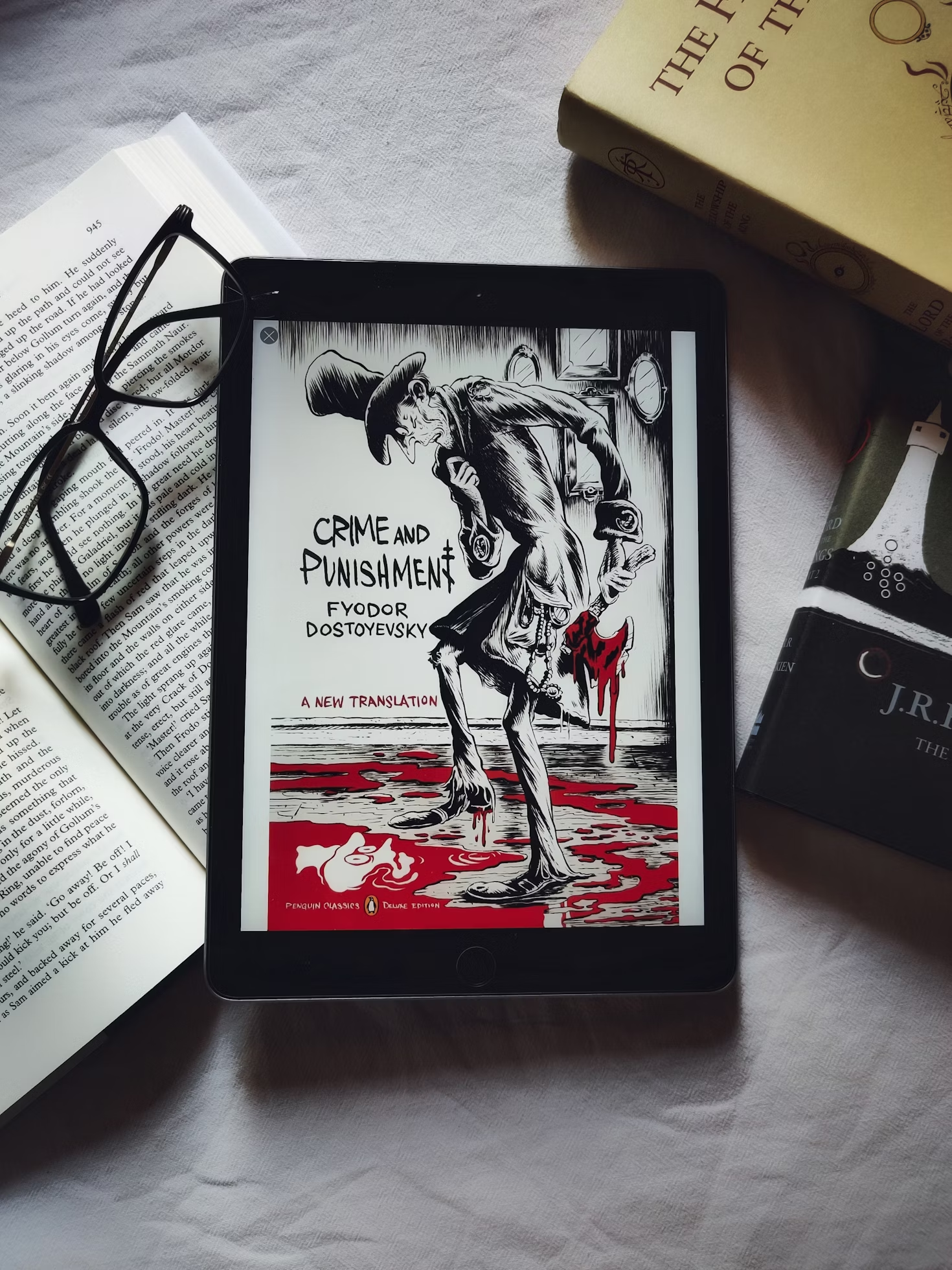
The axe used by Raskolnikov to commit murder is a crude, brutal weapon, symbolising the raw violence of his act. It underscores the stark disconnect between his intellectual justification and the sordid reality of murder. - The Cross and Redemption:
The Orthodox cross given to Raskolnikov by Sonia symbolises the possibility of spiritual redemption. It serves as a stark reminder of the moral and religious dimensions underpinning the narrative. - Dreams and Horses:
Raskolnikov’s dream of a horse being beaten to death reflects his inner guilt and moral repulsion. It also foreshadows the brutality of his crime and the suffering it inflicts upon others. - St. Petersburg:
The city is not merely a backdrop but a symbolic landscape reflecting Raskolnikov’s mental state. Its squalor, poverty, and chaos echo his fractured psyche and moral decay.
Raskolnikov’s Internal Struggle
Raskolnikov’s journey is one of profound internal conflict.
- The Theory of the “Extraordinary Man”:
Raskolnikov’s justification for murder hinges on his belief that some individuals, like Napoleon, transcend ordinary morality and are entitled to commit crimes for the greater good. This intellectual arrogance is at odds with his deeper conscience. - Guilt and Paranoia:
His psychological unravelling post-murder, marked by paranoia and delusions, illustrates the unsustainability of his theory. The weight of guilt becomes a crushing force that drives him toward confession. - Sonia and Redemption:
Sonia represents humility, faith, and compassion. Through her unwavering belief in his redemption, Raskolnikov confronts his moral failings and begins the journey toward atonement. - Dostoevsky’s Influence:
Dostoevsky’s own experience with imprisonment and exile in Siberia deeply informs Raskolnikov’s trajectory. The author had been sentenced to death (later commuted) for his involvement with a radical political group, and this brush with mortality, followed by years of hard labour, instilled in him a profound understanding of suffering, faith, and human resilience.
Language and Unique Style
- Polyphony:
Dostoyevsky gives voice to multiple competing worldviews in the novel, creating a “polyphonic” structure. Each character, from Raskolnikov to Sonia to Porfiry, embodies a distinct philosophical stance, making the novel a tapestry of ideas. - Symbolic and Repetitive Patterns:
Key phrases and symbols recur throughout the text, creating an almost hypnotic rhythm. For example, the repetition of the word “murder” in Raskolnikov’s internal monologues mirrors his obsessive guilt. - Colloquial and Elevated Language:
Dostoyevsky blends colloquial speech with philosophical discourse. This juxtaposition creates a tension between the mundane and the transcendent, reflecting the dual nature of his characters’ struggles. - Emphasis on Ambiguity:
Dostoyevsky resists clear moral judgments, leaving room for ambiguity. Even in the epilogue, Raskolnikov’s redemption is not depicted as immediate or total; it is a process, filled with uncertainty.
Final reflections
Crime and Punishment is a profound exploration of human nature, grappling with timeless questions of morality, justice, and redemption. Dostoevsky’s innovative style—marked by psychological depth, symbolic resonance, and philosophical inquiry—ensures its enduring relevance. His personal history adds an autobiographical layer, enriching Raskolnikov’s story with authenticity. Though translation inevitably alters some nuances, the novel’s core remains remarkably intact, offering readers around the world a vivid and haunting portrait of the human soul.