

Part of the series Exploring the Literary Giants, examining major writers through paired comparisons of context, style, and enduring impact.
🔍 The birth of the Gothic, the power of fear, and the dark secrets behind respectable appearances.
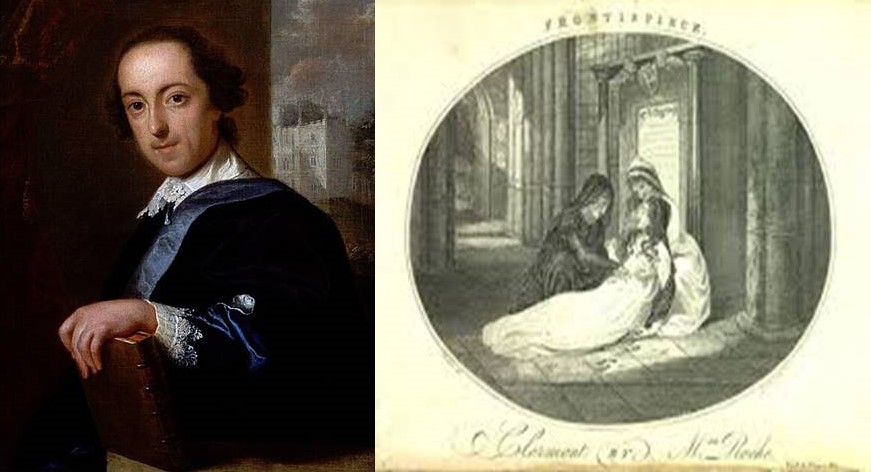
Why these two?
What better pairing for Halloween than the writer who helped establish the Gothic novel and one of the women who made it a publishing sensation?
Horace Walpole (1717-1797) and Regina Maria Roche (1764-1845) approached Gothic fiction from different perspectives. Walpole introduced readers to haunted castles, supernatural phenomena and ancient family curses. Roche, on the other hand, brought the genre into the realm of family conflicts, heroines in distress, hidden stories and emotional suffering.
Their connection lies in the evolution of Gothic fiction, tracking a clear path from Walpole’s extravagant experiment in supernatural romance to the highly emotional narratives captivating readers at the close of the eighteenth century. This historical development did not merely give rise to a new genre, but demonstrated just how far the boundaries of literary horror could actually be pushed.
Time, place, movement
Horace Walpole was born in London in 1717, the youngest son of Sir Robert Walpole, Britain’s first de facto prime minister. He enjoyed a privileged upbringing, travelled through Europe and developed a lasting interest in art, architecture and collecting. His fascination with medieval design found its most visible expression at Strawberry Hill, his home in Twickenham, which he transformed into an elaborate Gothic villa.
In 1764, Walpole published The Castle of Otranto. Initially presented as the translation of an old Italian manuscript, the novel combined medieval romance, supernatural events and the conventions of prose fiction. Its second edition, published in 1765, carried the subtitle A Gothic Story. The genre had acquired its name.
Regina Maria Roche was born in County Waterford, Ireland, around 1764. Raised in Dublin, she began writing at an early age. Her first novels appeared under her maiden name, Regina Maria Dalton, but it was The Children of the Abbey (1796) that established her reputation. The book became an extraordinary commercial success and remained in print for much of the nineteenth century.
Roche was writing during the great expansion of Gothic fiction, when readers were drawn to mysterious buildings, family secrets and heroines facing dangers beyond their control. Although her popularity was considerable, her reputation would later suffer the fate of many successful women writers: she was gradually excluded from the standard literary histories.
Walpole died in 1797, just as Roche’s career was flourishing. Their lives overlapped, but their literary achievements represent different stages in the development of the same movement.
Core themes
In Walpole’s fiction, the past refuses to remain buried. The Castle of Otranto is driven by inherited guilt, disputed legitimacy and the consequences of illegitimate power. The castle becomes more than a setting: its architecture, secret passages and supernatural manifestations expose the instability of Manfred’s authority. The enormous helmet that crushes his son at the beginning of the novel announces that ordinary rules no longer apply.
Roche also explores the consequences of the past, but her attention is directed towards the people caught in its conflicts. In The Children of the Abbey, deception, the loss of inheritance and the vulnerability of the innocent shape the fate of the protagonists. The dangers are not always supernatural. Greed, manipulation and cruelty can be just as destructive.
Both authors question the security offered by wealth, family and social position. A castle may conceal a terrible history; a respectable household may harbour betrayal. In their fiction, appearances are unreliable and the powerful are not necessarily deserving of their authority.
There is, however, a difference in emphasis. Walpole is concerned with the spectacular consequences of past wrongdoing and the supernatural forces that expose it. Roche is more interested in the emotional and social cost of injustice, particularly for women whose futures are often determined by other people’s decisions. Her heroines must negotiate a world in which virtue offers no automatic protection.
Style comparison
Walpole’s writing is theatrical, energetic and deliberately extravagant. He favours dramatic revelations, sudden reversals and supernatural interventions. His characters can seem less important than the machinery of the plot, while the castle and its mysteries dominate the reader’s imagination. He was not concerned with making the Gothic entirely plausible. His aim was to restore the imaginative freedom of older romance, allowing the marvellous to coexist with the familiar.
Roche’s approach is closer to the sentimental novel. Her narratives give greater space to emotional experience, moral dilemmas and the suffering of her protagonists. She uses Gothic conventions within a more recognisable social and domestic world, allowing suspense to develop alongside the reader’s attachment to the characters.
Both writers combine romance, danger and intense emotions, yet they create very different kinds of Gothic tension. Walpole favours the dramatic shock of supernatural events and the grandeur of a world governed by ancient curses. Roche creates suspense through human relationships, emotional uncertainty and the vulnerability of those caught up in circumstances beyond their control. The terror in The Castle of Otranto manifests itself with spectacular force; in Roche’s novels, by contrast, it often arises from situations that seem all too plausible.
Key works
Walpole’s The Castle of Otranto (1764) remains his defining literary achievement. Its haunted castle, disputed inheritance, supernatural occurrences and tyrannical ruler established conventions that generations of Gothic writers would revisit. It is an imperfect, sometimes wonderfully absurd novel, but its historical importance is undeniable. Walpole also wrote The Mysterious Mother (1768), a tragedy concerned with incest, guilt and concealed family history, which explores similarly disturbing material through the theatre. His Hieroglyphic Tales (1785), meanwhile, reveal a more playful and experimental imagination, full of strange transformations and fantastical situations.
Roche’s best-known novel, The Children of the Abbey (1796), follows Amanda and Oscar Fitzalan, whose lives are disrupted by deception and the loss of their rightful inheritance. Its combination of family tragedy, sentimental feeling and Gothic mystery made it one of the most successful novels of its period. Clermont (1798) is another significant Gothic romance. Jane Austen included it among the novels mentioned in Northanger Abbey, her affectionate satire of Gothic reading habits.
Roche’s earlier works, The Vicar of Lansdowne, or Country Quarters (1789) and The Maid of the Hamlet (1793), show her developing interest in sentimental and Gothic fiction. Later, in The Tradition of the Castle (1824), she turned towards Irish settings and subjects, combining romantic fiction with a stronger interest in Irish society and history.
Legacy and influence
Walpole’s place in literary history is secure. The Castle of Otranto helped establish a form of fiction that would inspire Ann Radcliffe, Matthew Lewis, Mary Shelley, Bram Stoker and countless later writers. His influence extended beyond literature: Strawberry Hill became an important example of Gothic Revival architecture, reflecting the same fascination with medieval forms that shaped his fiction.
Roche’s reputation followed a very different course. The Children of the Abbey enjoyed remarkable success and remained popular for decades, yet its author gradually disappeared from the general literary conversation. Her appearance in Northanger Abbey offers a small but telling reminder of her place in the reading culture of Austen’s time.
The contrast between their subsequent reputations is revealing. Walpole became a central figure in accounts of the Gothic novel, while Roche was largely forgotten by the wider reading public. This imbalance reflects not simply changing tastes, but also the uneven recognition afforded to women writers, even when their books had once been bestsellers.
Renewed scholarly interest has begun to restore Roche to discussions of early Gothic fiction. Reading her alongside Walpole helps give a fuller account of the genre’s development, which depended not on one celebrated originator but on many writers who adapted its conventions for new audiences.
Final reflections
Walpole and Roche remind us that Gothic fiction has always been about more than ghosts, ruined buildings and supernatural spectacle. Its enduring subjects are power, injustice, family, identity and the consequences of secrets kept for too long.
Walpole gave the genre its haunted castle. Roche brought its terrors closer to home, where betrayal could wear a familiar face and danger could lurk behind a façade of respectability.
And somewhere between Walpole’s haunted castle and Roche’s tormented family, the Gothic reveals its oldest trick: the most frightening things are rarely those lurking in the darkness. They are the secrets just waiting to come to light.
Part of the series: Exploring the Literary Giants
→ View all entries in this series